
Every parent wants to give their child the tools to grow strong, confident, and capable. While organized sports and screen-free play both have their place, there's one activity that checks nearly every developmental box at once: climbing.
Whether it's a rock wall, a set of climbing panels, or a Swedish ladder mounted in the living room, climbing engages a child's body and mind in ways that few other activities can match. Here's why movement specialists, pediatric therapists, and educators all agree that climbing deserves a central role in childhood.
It Builds Whole-Body Strength — Not Just Arms
When most adults think of climbing, they picture upper body effort. But for kids, climbing is a full-body workout. Gripping a rung or hold engages the hands, forearms, and shoulders. Pushing upward activates the legs, glutes, and core. Even the feet are working — learning to grip, balance, and find stable footing.
Unlike isolated exercises (which aren't appropriate for young children anyway), climbing develops functional strength: the kind that helps kids run faster, jump higher, carry their backpack without slouching, and sit upright at a desk without fatigue.
It Sharpens Coordination and Spatial Awareness
Climbing requires children to plan their movements in three dimensions. Which hand goes where? How far is the next rung? Can I reach that hold if I shift my weight to the left foot?
This kind of motor planning — called "praxis" in developmental terms — is one of the most complex skills the brain can perform. It integrates visual input, proprioception (the sense of where your body is in space), and bilateral coordination (using both sides of the body together). Children who climb regularly tend to develop stronger spatial reasoning, which later supports skills like handwriting, geometry, and even driving.
It Teaches Risk Assessment — Safely
One of the greatest gifts you can give a child is the ability to evaluate risk on their own. Climbing provides a natural, graduated way to build this skill. A child standing three rungs up on a Swedish ladder is making real-time decisions: Am I comfortable here? Can I go higher? Do I need to come back down?
This is fundamentally different from being told "be careful." When children learn through their own bodies that a certain height feels manageable and another doesn't — not because someone warned them, but because they felt it — they develop genuine judgment. Research in developmental psychology calls this "risky play," and it's increasingly recognized as essential for building resilience and reducing anxiety later in life.
It Boosts Confidence in a Way That Praise Alone Cannot
There's a particular kind of confidence that comes from doing something physically challenging. It's not the confidence that comes from being told "good job" — it's the deep, internal sense of "I did that."
When a four-year-old reaches the top of a climbing panel for the first time, or a seven-year-old finally masters a pull-up on the Swedish ladder bar, they experience genuine accomplishment. This kind of embodied success builds self-efficacy: the belief that effort leads to results. It's one of the strongest predictors of long-term motivation and mental health.
It Gets Kids Moving Without Feeling Like "Exercise"
Let's be honest — telling a five-year-old to "go exercise" doesn't work. But installing a climbing wall or indoor playground? Suddenly you can't get them to stop moving.
Climbing taps into something primal and joyful for children. It's play, not a workout. It's adventure, not a routine. And because it's always available at home (no driving to the gym, no scheduled practice), it naturally integrates movement into daily life. Many CleverWood customers tell us their kids use their Swedish ladder or climbing panels multiple times a day — before school, after school, and sometimes even as a way to burn off energy before bedtime.
It Supports Sensory Development
For children who are sensory-seeking — those who crave deep pressure, movement, and physical input — climbing is ideal. The heavy work of pulling your body weight upward provides proprioceptive input that helps regulate the nervous system. Many occupational therapists recommend climbing equipment for children with sensory processing differences, ADHD, or autism, as it provides the intense physical feedback these children need to feel calm and focused.
Even for neurotypical children, the sensory richness of climbing — the texture of wood under the hands, the feeling of height, the vestibular challenge of being upside down on a playground — contributes to healthy sensory integration.
It Brings the Family Together
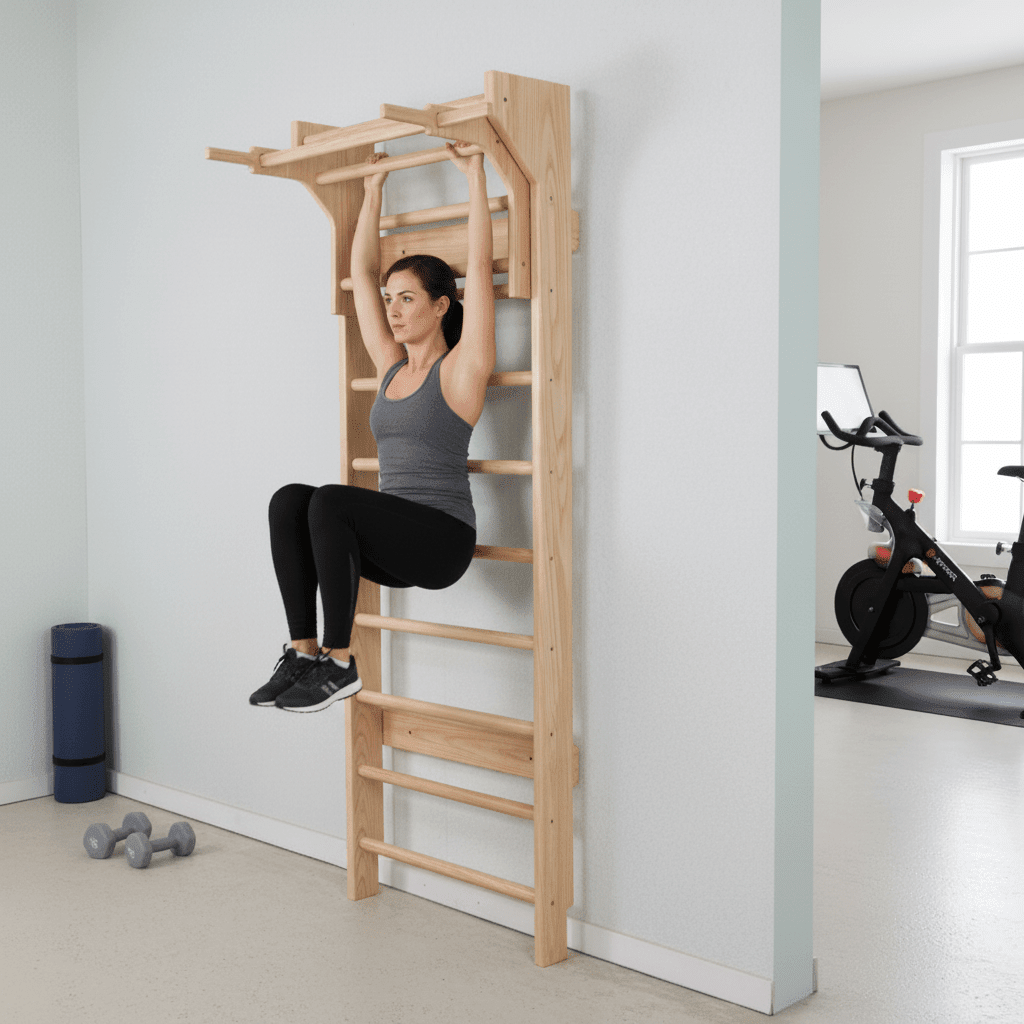
One of the things we hear most often from CleverWood families is that their equipment isn't just for the kids. Parents use the Swedish ladder for stretching, pull-ups, and rehab exercises. Older siblings challenge each other on the climbing panels. Toddlers hang from the lowest rung while teenagers work on muscle-ups at the top.
A piece of climbing equipment in the home becomes a shared space for movement — a place where the whole family is active together, without screens, without scheduling, without leaving the house.
How to Get Started
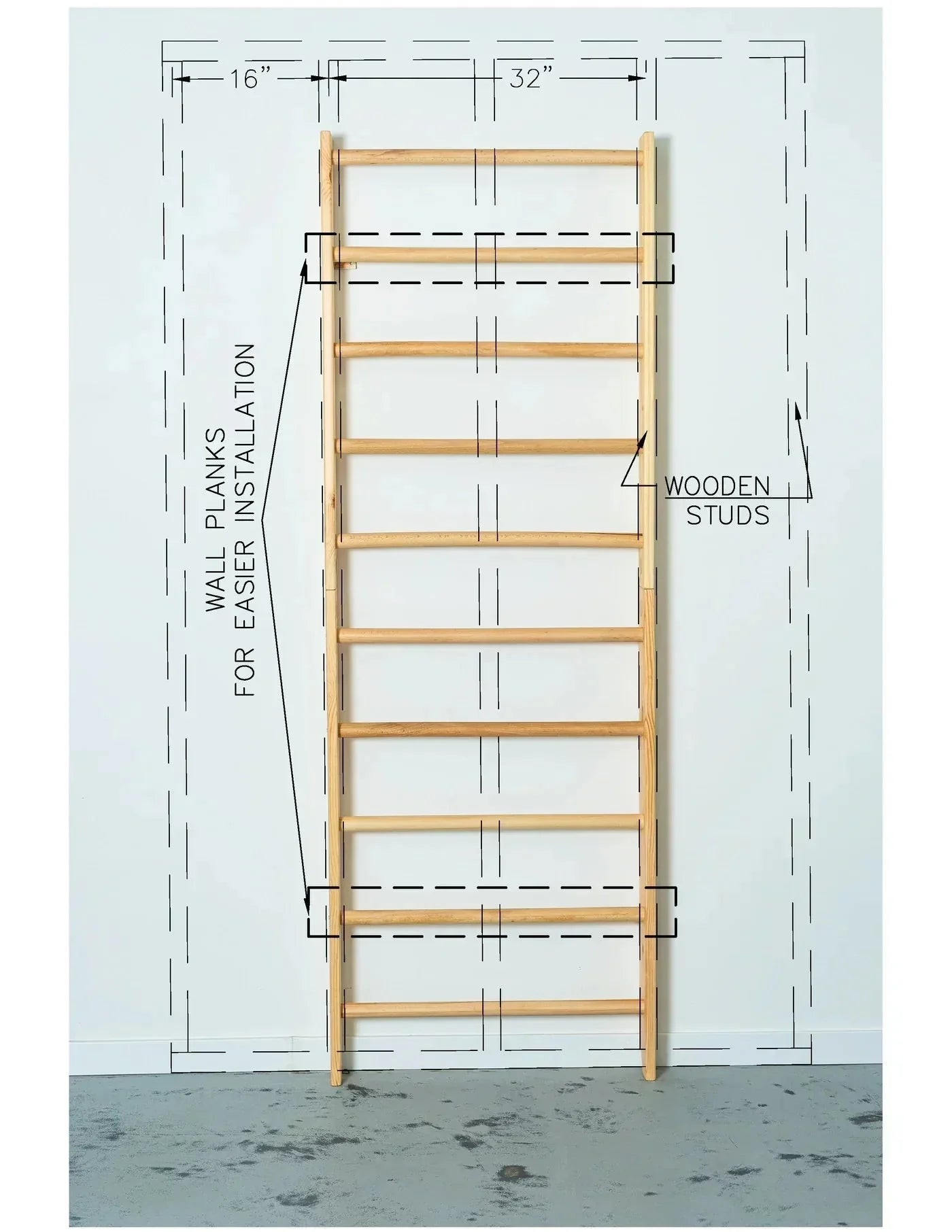
You don't need a dedicated gym room or a massive budget to bring climbing into your child's life. A wall-mounted Swedish ladder takes up almost no floor space and can support the whole family. A set of climbing panels can be configured to fit your wall and your child's skill level. Even a simple indoor playground with a ladder and rings can transform a corner of a bedroom into an active play zone.
The key is to choose equipment that's safe, durable, and designed to grow with your child. Look for solid wood construction, smooth finishes, tested weight capacities, and wall-mounting hardware that can handle real use — not just decoration.
At CleverWood, every piece is handcrafted from natural wood, weight-tested for both kids and adults, and shipped with everything you need for installation. Because we believe that movement isn't a luxury — it's a foundation.
Ready to bring more movement into your home? Explore our Swedish Ladders, Climbing Panels, and Indoor Playgrounds.