Children grow quickly—and the way they play changes just as fast. A toddler may begin by carefully climbing a few low steps, while an older child may want to swing, stretch, climb higher, or invent an entire obstacle course.
That is why the best indoor playground is not simply a toy for one stage of childhood. It is a flexible play space that encourages new challenges, creative movement, and independent exploration for years to come.
Here is how to create an indoor playground that fits your home today and continues to support active play as your child grows.
Start With the Space You Have
You do not need a separate playroom to create an exciting indoor activity area. A bedroom corner, family room, finished basement, or open wall can become a practical place for climbing and movement.
Before choosing playground equipment, measure:
- The available floor space
- The height and width of the room
- The distance from doors, windows, furniture, and ceiling fixtures
- The space needed around the playground for comfortable movement
- The area available for an impact-absorbing mat
Make sure the playground does not block a walkway or create a tight space between the equipment and nearby furniture.
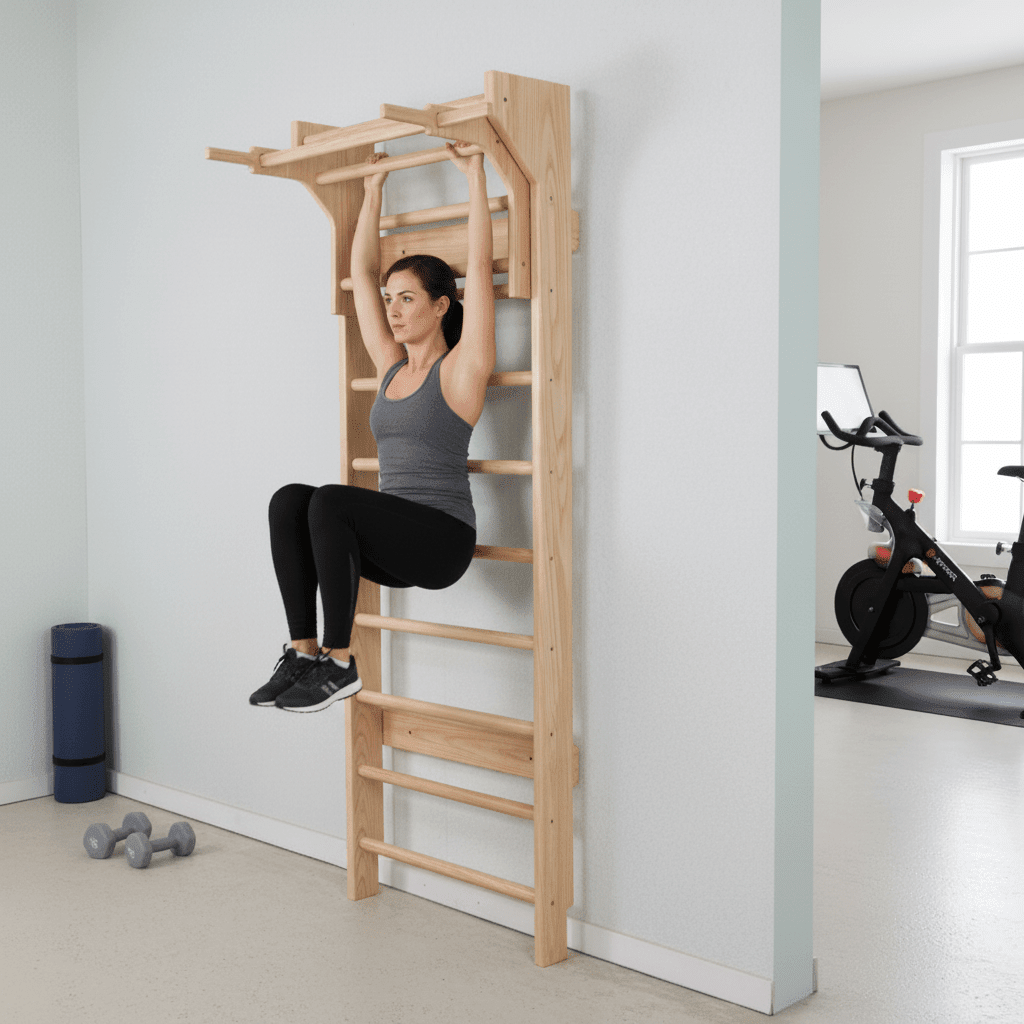
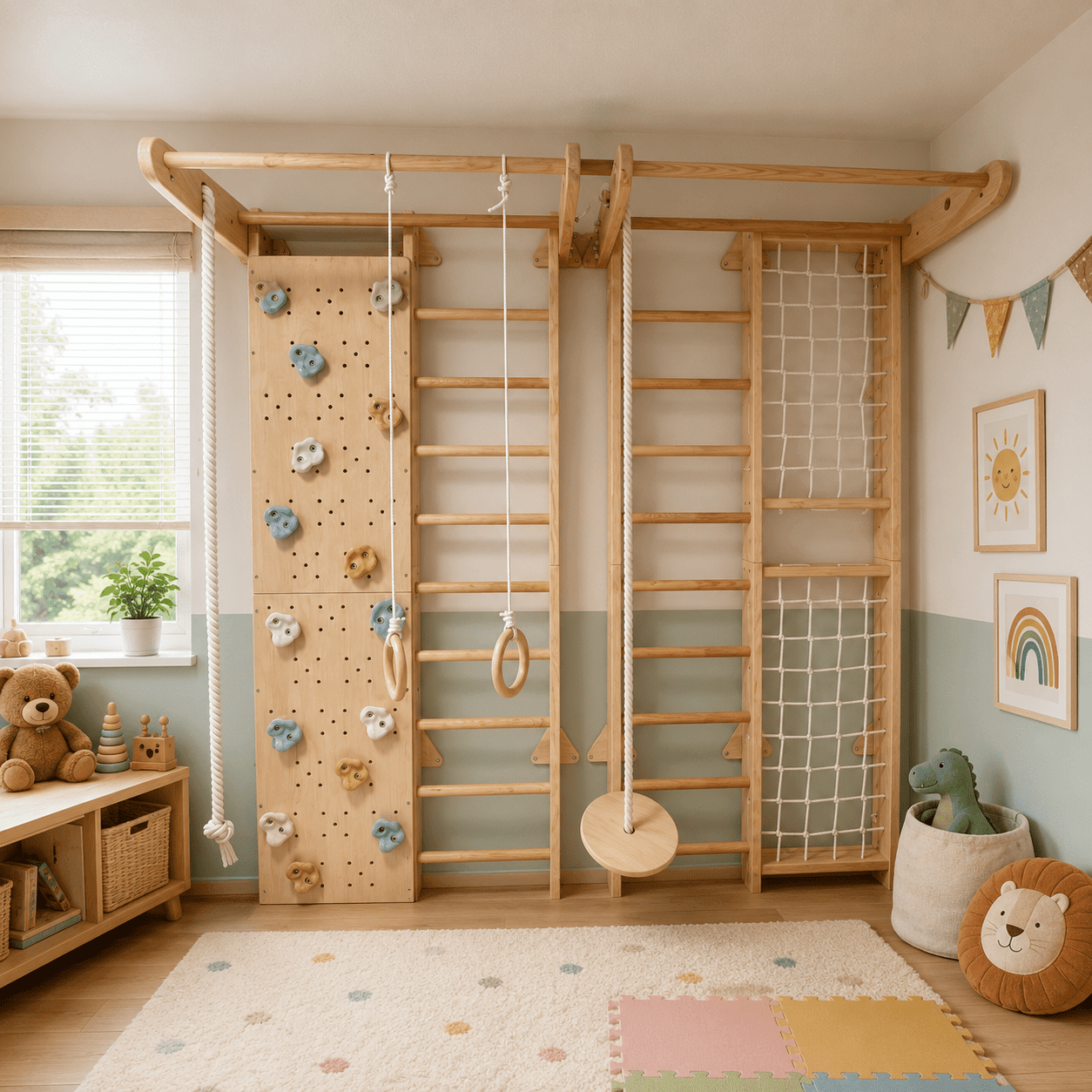
For smaller homes, a wall-mounted or foldable playground can provide multiple activities without permanently taking over the room. Larger rooms may accommodate a combination of climbing structures, nets, ladders, rings, or other accessories.
Choose Activities That Can Become More Challenging
Children remain interested in playground equipment when they can use it in different ways.
A simple climbing structure may begin as a place to practice stepping, reaching, and balancing. Later, the same structure can become part of a more advanced climbing route, exercise station, imaginary fort, or indoor obstacle course.
Look for features that support several types of movement, such as:
- Climbing
- Hanging
- Swinging
- Balancing
- Crawling
- Stretching
- Reaching
- Imaginative play
A playground with several activity options gives children the freedom to create their own games instead of following only one fixed activity.
Think Beyond Physical Exercise
An indoor playground is not only a place to burn energy. It can also become a castle, spaceship, mountain, jungle, rescue station, or secret hideout.
Open-ended equipment encourages children to use their imagination. A climbing net may become a ship’s sail. A ladder may become the entrance to a tower. A blanket placed over part of the structure can transform it into a reading nook or playhouse.
This type of play helps keep the playground interesting because the activity changes even when the equipment stays the same.
Instead of telling children exactly how to play, give them a safe space and allow them to create their own adventures.
Create Different Levels of Challenge
A playground that grows with a child should offer both easy and challenging activities.
Younger children can begin with lower sections while developing confidence and learning how to place their hands and feet. As their abilities improve, they can gradually explore higher or more complex routes under adult supervision.
Parents can also create new challenges without changing the entire playground. For example:
- Choose a new path across the structure
- Climb using only certain steps
- Move slowly without touching the floor
- Hang for a few seconds
- Carry a soft toy through an obstacle course
- Complete a route in reverse
- Combine climbing with stretching or balance activities
The goal is not to push children beyond their comfort level. It is to give them opportunities to progress naturally as their confidence grows.
Select a Design That Belongs in Your Home
Indoor playground equipment becomes part of the room, so appearance matters.
Natural wood works well in many interiors because it feels warmer and less industrial than large plastic or metal play structures. Neutral finishes can blend into a bedroom or family room, while colorful climbing holds and accessories can add a playful accent.
Consider the furniture, wall colors, flooring, and overall style of the room. A thoughtfully selected playground can look like an intentional part of the home rather than something that must be hidden when guests arrive.
Leave Room for Future Accessories
Children’s interests change over time. Choosing a playground that can work with different accessories makes it easier to refresh the play experience later.
Depending on the structure, accessories may include:
- Gymnastic rings
- Climbing ropes
- Rope ladders
- Swings
- Climbing nets
- Slides
- Activity boards
- Additional climbing elements
Accessories can introduce a new activity without requiring parents to replace the main playground.
Always make sure that every accessory is compatible with the structure and installed according to the manufacturer’s instructions.
Make Safety Part of the Design
A beautiful playground must also be installed and used responsibly.
Place the structure on a level surface and follow all assembly and mounting instructions carefully. Check that fasteners are secure before use and inspect the equipment regularly for movement, wear, or damage.
Use an impact-absorbing mat underneath and around the active play area. Keep hard furniture, sharp corners, glass objects, and other hazards away from the climbing space.
Children should always use indoor climbing equipment with appropriate adult supervision. Parents should also make sure the equipment and activities are suitable for the child’s age, size, and abilities.
Establish simple rules from the beginning, such as:
- One child climbs at a time when space is limited
- No pushing or pulling
- Keep toys and loose objects away from the landing area
- Use accessories only as intended
- Stop playing if any part feels loose or unstable
Clear rules allow children to enjoy greater freedom while helping parents maintain a safer play environment.
Make Active Play Part of the Daily Routine
An indoor playground is most valuable when children can use it regularly.
Unlike an outdoor playground, an indoor activity space is available during rain, snow, extreme heat, or busy days when a trip to the park is not possible. Even a short period of climbing, hanging, or imaginative play can become a positive part of the family’s routine.
There is no need to organize a formal workout. Children naturally create movement when engaging equipment is visible and accessible.
Parents can occasionally introduce a game or challenge, but it is equally important to allow unstructured play.
A Play Space That Changes With Your Family
The right indoor playground can support many stages of childhood. It may begin as a carefully supervised climbing area for a young child and later become a place for obstacle courses, imaginative adventures, stretching, hanging, and active family play.
The key is to choose a versatile design, plan the surrounding space carefully, and provide activities that can become more challenging over time.
With thoughtful planning, an indoor playground can be more than another item in the playroom. It can become a lasting part of your child’s everyday movement, creativity, confidence, and fun.
Explore CleverWood Indoor Playgrounds
Discover beautifully crafted wooden playgrounds designed to bring active, imaginative play into your home.