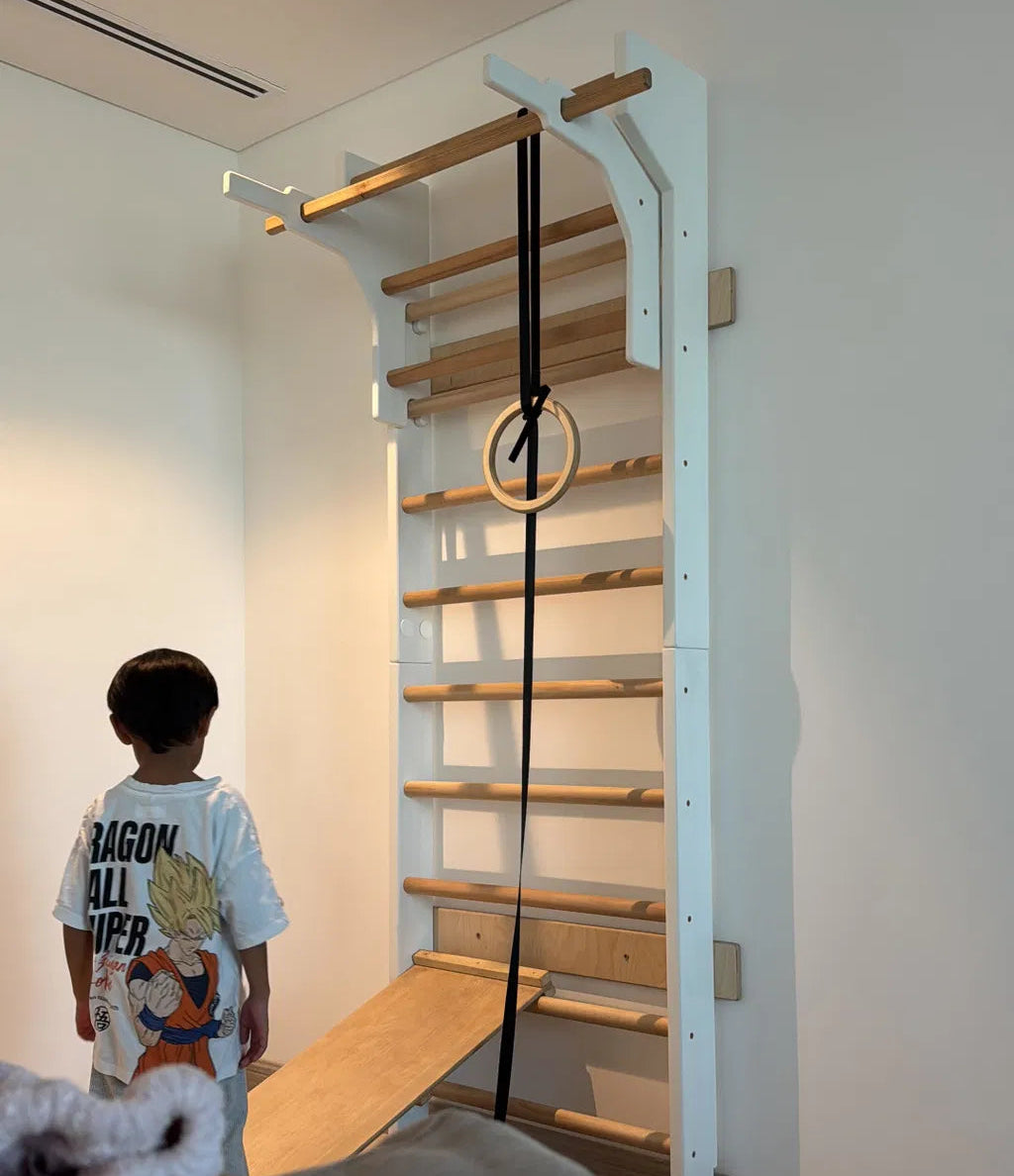
Una escalera sueca en tu pared es una de las piezas de equipamiento más versátiles que jamás poseerás, pero la mayoría de la gente solo la usa para hacer dominadas. Eso es como comprar una cocina y usar solo el microondas.
La verdad es que una escalera sueca montada en la pared permite realizar docenas de ejercicios de fuerza, flexibilidad, movilidad y entrenamiento central. Tanto si eres un principiante absoluto, un padre que aprovecha una sesión rápida mientras los niños duermen la siesta, o alguien que entrena seriamente en casa, este equipo ofrece mucho más de lo que parece a simple vista.
Aquí tienes 15 ejercicios organizados por dificultad, con consejos sobre la técnica y errores comunes.
Principiante
1. Colgado muerto (Dead Hang)
Agarra el peldaño más alto al que puedas llegar cómodamente, separa los pies del suelo y simplemente cuélgate. Eso es todo. Brazos estirados, hombros activados, pies sin tocar el suelo.
Suena sencillo, pero el colgado muerto descomprime la columna después de un largo día sentado, fortalece el agarre y abre los hombros. Empieza con 15–20 segundos e intenta llegar a un minuto completo. Si puedes colgarte durante 90 segundos, tu fuerza de agarre es superior a la de la mayoría de los usuarios de gimnasio.
2. Estiramiento de espalda de pie
Ponte de espaldas a la escalera, a un paso de distancia. Extiende ambos brazos por encima de la cabeza y hacia atrás para agarrar un peldaño a la altura de los hombros o ligeramente por encima. Inclina suavemente el pecho hacia adelante, dejando que la escalera abra los hombros y la parte superior de la espalda.
Mantén la posición durante 20–30 segundos. Este es uno de los mejores estiramientos para cualquier persona que trabaje en un escritorio. Lo sentirás en el pecho, la parte delantera de los hombros y hasta los dorsales.
3. Sentadilla asistida
Ponte de cara a la escalera y sujeta un peldaño a la altura de la cintura. Baja hasta una sentadilla profunda usando la escalera para mantener el equilibrio —no para impulsarte, solo para evitar caer hacia atrás—. Esto te permite bajar más en la sentadilla de lo que podrías normalmente, abriendo las caderas y los tobillos.
Es particularmente útil para adultos mayores o personas que se recuperan de una lesión en el tren inferior y necesitan estabilidad para trabajar el rango de movimiento.
4. Elevación de talones
Ponte de pie en el peldaño más bajo con la parte delantera de los pies en el borde y los talones colgando. Sujétate de un peldaño más alto para mantener el equilibrio. Baja los talones por debajo del peldaño y luego empuja hacia arriba sobre las puntas de los pies tanto como puedas.
La clave es el estiramiento en la parte inferior: ir por debajo del nivel del peldaño te da un rango de movimiento que no puedes conseguir en el suelo. Haz tres series de 15 repeticiones y tus gemelos te lo agradecerán.
5. Estiramiento de zancada asistido
Ponte de cara a la escalera y sujeta un peldaño a la altura de la cintura. Da un paso largo hacia atrás hasta adoptar una posición de zancada profunda. Usa la escalera para el equilibrio mientras hundes las caderas hacia el suelo. Deberías sentir un estiramiento profundo en el flexor de la cadera de la pierna trasera.
Mantén 30 segundos por lado. Es esencial para cualquier persona que pase la mayor parte del día sentada; tener los flexores de la cadera tensos es la causa de una cantidad sorprendente de problemas de espalda.
Intermedio
6. Elevación de rodillas colgado
Cuélgate de un peldaño alto (o de la barra de dominadas) con los brazos estirados. Eleva lentamente las rodillas hacia el pecho, haz una pausa y baja con control. No te balancees: cuanto más lento lo hagas, más trabajará tu core.
Empieza con 8–10 repeticiones. Una vez que puedas hacer 15 con buena técnica, estarás listo para avanzar hacia las elevaciones de piernas estiradas.
7. Flexiones inclinadas (pies elevados)
Coloca los pies en un peldaño (empieza bajo, en el segundo o tercer peldaño) y las manos en el suelo en posición de flexión. Haz flexiones con los pies elevados. Cuanto más alto sea el peldaño, más difícil será la flexión.
Es una herramienta de progresión brillante. Empieza en el primer peldaño y, a lo largo de las semanas, ve subiendo. Para cuando tengas los pies en el quinto o sexto peldaño, estarás acercándote al terreno de las flexiones verticales (hacer el pino).
8. L-Sit (apoyado)
Sujeta un peldaño a la altura de la cadera mientras estás de pie frente a la escalera. Levanta las piernas estiradas frente a ti hasta que tu cuerpo forme una L. Mantén la posición.
Es extremadamente duro para el core y los flexores de la cadera. Incluso 5–10 segundos son un logro real para la mayoría de las personas. Usa un peldaño más bajo y dobla las rodillas si aún no puedes mantener las piernas estiradas.
9. Estiramiento lateral con rotación
Ponte de lado a la escalera. Extiende un brazo por encima de la cabeza y agarra un peldaño por encima de ti, mientras la otra mano sujeta un peldaño a la altura de la cadera. Inclina suavemente las caderas hacia el lado contrario a la escalera mientras rotas el pecho hacia arriba.
Esto abre toda la cadena lateral (oblicuos, dorsales, intercostales) de una manera muy difícil de replicar sin una estructura vertical fija. Mantén 20–30 segundos por lado.
10. Remo invertido
Colócate debajo de un peldaño a la altura de la cintura (o usa la barra de dominadas si es ajustable). Sujeta el peldaño, extiende tu cuerpo debajo de él en línea recta con los talones en el suelo y tira de tu pecho hacia la barra. Baja lentamente.
Es la mejor manera de desarrollar fuerza de tracción antes de poder hacer dominadas completas. Cuanto más bajo sea el peldaño, más difícil será el remo. Apunta a tres series de 10–12 repeticiones.
Avanzado
11. Dominada (Pull-Up)
El clásico. Sujeta la barra de dominadas o el peldaño superior, con las palmas mirando hacia afuera (agarre prono). Tira hacia arriba hasta que tu barbilla pase la barra. Baja completamente con control.
Consejo: si aún no puedes hacer una dominada completa, usa los peldaños para apoyar los pies y asistirte solo lo necesario para completar el movimiento. Reduce la asistencia de los pies con el tiempo. Las dominadas con salto (saltar hasta arriba y bajar lentamente) son otra excelente progresión.
12. Fondos (Dips)
Usando accesorios de barras para fondos, sujétalas y soporta tu peso corporal con los brazos estirados. Baja doblando los codos hasta que tus brazos estén aproximadamente paralelos al suelo. Empuja de nuevo hacia arriba.
Mantén los codos pegados; no dejes que se abran. Inclínate ligeramente hacia adelante para trabajar más el pecho, o mantente erguido para enfatizar los tríceps. Empieza con 5 repeticiones y aumenta a partir de ahí.
13. Elevación de piernas colgado (piernas estiradas)
Cuélgate de la barra y eleva las piernas estiradas frente a ti hasta que estén paralelas al suelo, o más alto si puedes. Baja con control. Sin balanceos.
Es uno de los ejercicios de core más efectivos que existen. Apunta a toda la pared abdominal, particularmente a la parte inferior de los abdominales que son notoriamente difíciles de alcanzar. Si tus piernas no se mantienen estiradas, vuelve a las elevaciones de rodilla y sigue fortaleciendo.
14. Limpiaparabrisas
Cuélgate de la barra y eleva las piernas a la posición de L-sit. Manteniendo las piernas juntas y estiradas, rótalas de un lado a otro como un limpiaparabrisas. El rango de movimiento puede ser pequeño al principio e incrementarse a medida que desarrolles la fuerza de los oblicuos.
Este es un movimiento avanzado que requiere una estabilidad central seria. No lo intentes hasta que puedas mantener un L-sit colgado durante al menos 10 segundos.
15. Muscle-Up
El rey de los ejercicios de tracción con peso corporal. Empieza desde un colgado muerto y tira hacia arriba explosivamente, haciendo una transición en la parte superior para que tu pecho esté por encima de la barra y tus brazos te impulsen hacia una posición de soporte, como la parte superior de un fondo.
Esto requiere una fuerza de tracción significativa, coordinación y práctica. La mayoría de la gente necesita meses de entrenamiento dedicado de dominadas y fondos antes de lograr un muscle-up limpio. Pero cuando lo hagas, entenderás por qué la gente se vuelve adicta a la calistenia.
Crear una rutina
No necesitas hacer los 15 ejercicios en una sola sesión. Aquí tienes tres rutinas de muestra según tus objetivos:
Estiramiento rápido por la mañana (10 minutos): Colgado muerto, estiramiento de espalda de pie, estiramiento de zancada asistido, estiramiento lateral con rotación, elevación de talones.
Sesión de fuerza (25–30 minutos): Dominadas (3×5–8), fondos (3×5–8), remos invertidos (3×10), elevaciones de rodilla colgado (3×10), flexiones inclinadas (3×10), L-sit (3×10 segundos).
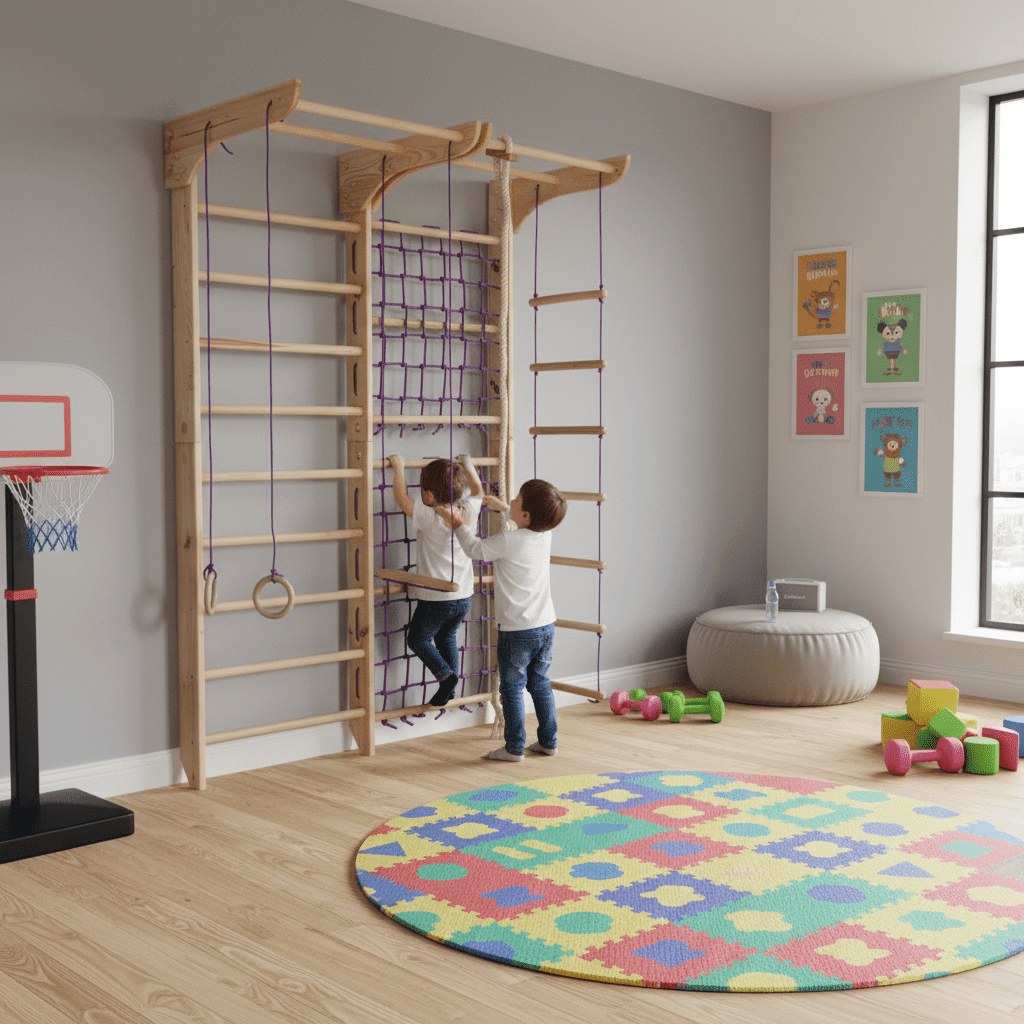
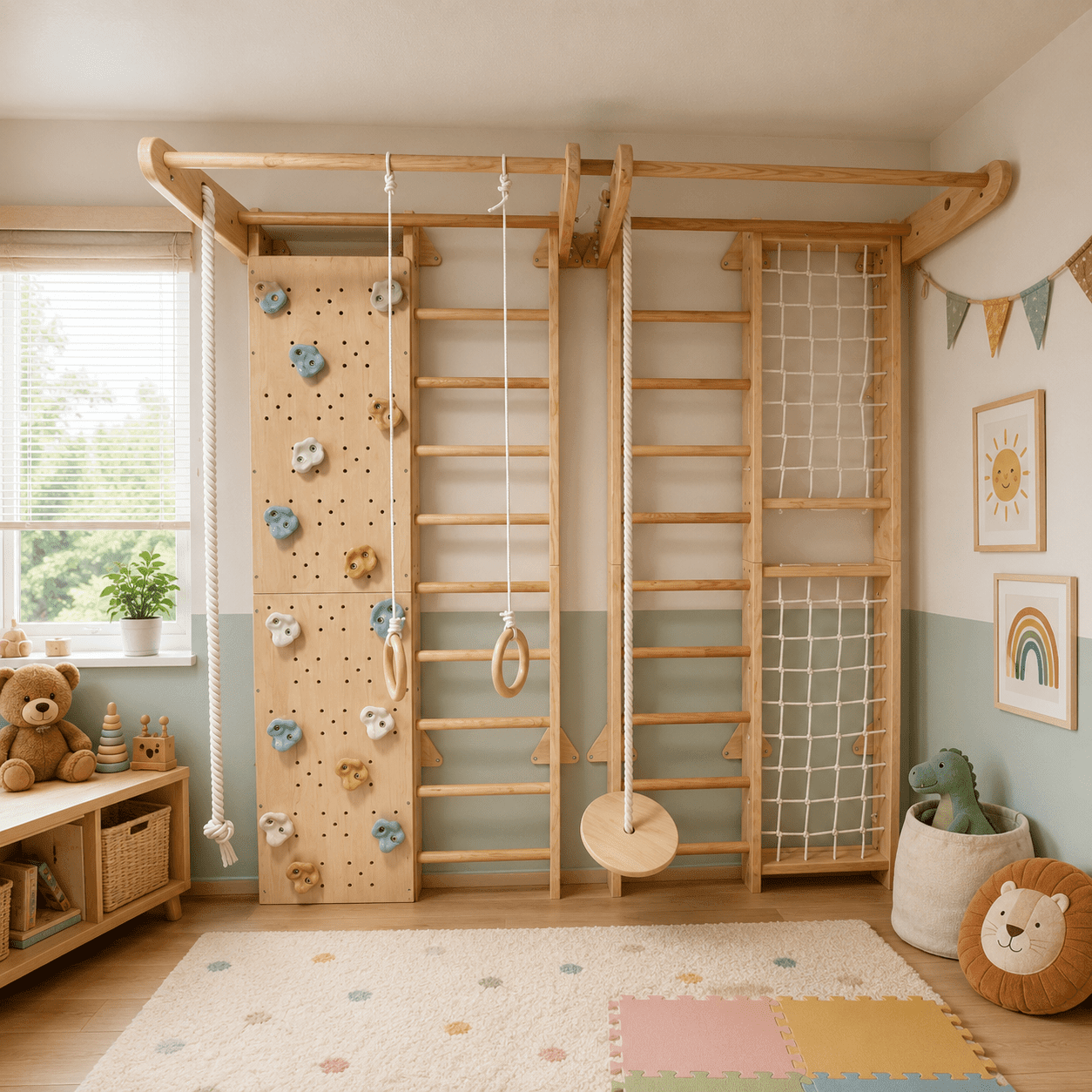
Tiempo de movimiento en familia (15 minutos): Los niños trepan y juegan en la escalera mientras los padres se turnan para hacer colgados muertos, sentadillas asistidas, elevaciones de talones y estiramientos de espalda. Sin necesidad de estructura, solo moverse juntos.
La belleza de una escalera sueca es que siempre está ahí. No necesitas montar nada, conducir a ningún lado ni comprometerte a una hora entera. Dos minutos de colgados muertos después del trabajo. Cinco minutos de estiramientos antes de dormir. Se suma más rápido de lo que crees.